
- What is Spanish Latte?
- The Origin
- My Spanish Latte Recipe
- Ingredients
- Putting everything together
- The Iced Spanish Latte
- Small Bonus
- What You’ll Need To Make Spanish Latte
- Iced Spanish Latte Recipe
- Prepare the coffee
- Add sweetened condensed milk
- Add cold milk
- Add the espresso shots
- Hot Spanish Latte Recipe
- Pull an espresso shot
- Steam your milk
- Pour the milk over the espresso and condensed milk
- Final Thoughts
- Рецепт и история классического латте
- Испанский латте
- Тыквенный латте
- Фисташковый латте
- Резюме
What is Spanish Latte?
Basically, it’s an espresso based drink with textured normal milk and condensed milk. Slightly sweeter than a normal latte but not as sweet as a latte with flavored syrup.
The Origin
Adding condensed milk to coffee is not a new thing and maybe you’ve already had a Vietnamese Coffee, Cafe Bonbon or Cafe Canario, but this latte as it’s showing up right now is a slight variation on these. First of all, it’s using espresso instead of drip coffee and it’s not using just condensed milk but it balances it out with textured milk.
There are also mentions about coffees with the same recipe but different names like Havana Latte, Cuban Latte, you can probably see a pattern here.
There’s not a lot of information out there about Spanish Latte so it’s really hard to pinpoint where it first started. The place that shows up most often in my searches is Think Coffee in NYC, although there are a lot of mentions about the drink in all corners of the continental USA.
My Spanish Latte Recipe
I started out with no measurements for my latte and I played around a bit with the ratio until I landed on the one that you see bellow.
Ingredients
- 2 espresso shots
- 1 oz sweetened condensed milk
- 5–6 oz textured steamed milk
Putting everything together
Using a warm latte cup I add the sweetened condensed milk. I don’t heat up the milk because I haven’t found that it’s worth the fuss of heating up such a small quantity.
I pull the espresso shots directly over the milk in the latte cup. I give it a quick stir, but that’s optional since adding the textured milk on top will mix everything anyway.
Texture the milk the way you would usually do for a latte, or just heat up milk and pour it over the coffee and condensed milk.
The Iced Spanish Latte
Since it’s finally summer and really warm in Seattle where I live I should note that this drink works great iced.
Using the same ingredients I like to switch the order a bit. I add the ice and then the coffee on top (make sure you don’t pour the hot coffee on the cold glass because it might shatter).
At this step, I like to add the condensed milk because I always love the way the condensed milk mixes with the coffee. Then I just top it off with cold milk (I don’t really see a point to texture the milk if you drink it iced).
Small Bonus
For an alcoholic version of the latte check out the recipe from NYTimes here.
Let me know if you tried the recipe and what you think about it. If you like this post and the recipe please give it a like, it helps out a lot. Thanks!
If you visit many specialty coffee shops around the world, you’ll find Spanish latte on the menu. But what is Spanish latte, and how is it different from a standard Caffè latte or other drinks that use similar ingredients? Also, what does it taste like, and can you brew it at home?
This article will answer those questions so that by the end, you’ll have a good idea of whether it’s a beverage you’d like to try.
Spanish latte is an increasingly popular espresso-based milk beverage that combines espresso shots with regular milk and condensed milk. Like a standard latte, you can enjoy it hot or iced.
If you’re familiar with the ingredients in a normal latte, you’ll see that the main difference between the two is the condensed milk in Spanish latte.
Condensed milk acts as a sweetener in Spanish latte instead of the flavored syrups you’d often add to a normal latte. It also means Spanish Latte is milkier than a normal latte. Spanish latte is popular among many coffee lovers who enjoy strong coffee with a touch of sweetness.
The exact origins of Spanish latte are unclear, but, as the name suggests, there’s no doubt it is a Spanish invention. However, it’s hardly the only coffee that uses condensed milk. Vietnamese Coffee, Café Bombón, or Cafe Canario contain condensed milk too. The main difference is that Spanish latte is espresso-based rather than made with drip coffee. It also combines condensed milk with textured milk. Thus, it’s regarded as a variation of those other condensed milk drinks.
Some people assume Spanish latte is Café con Leche (Spanish for coffee with milk). However, they are different. We enquired with the barista at our nearest coffee shop on the differences between the two. He advised us that Café con Leche uses equal parts espresso and scalded milk. To add to the confusion, he also told us that Cuban latte adds sugar and, on occasion, evaporated milk. However, they are all similar in translation, ingredients, and flavor.
However, this article focuses on Spanish latte, consisting of espresso, milk, and condensed milk.
What You’ll Need To Make Spanish Latte
An espresso machine or stove top espresso maker is ideal for making Spanish latte at home. Ideally, you’ll also have a grinder for grinding fresh beans for pulling the best shots. Then, according to how strong you want the drink to be, you can pull either a single or double shot of espresso.
Concentrated milk has approximately 60% of the water content removed, then sugar is added before canning. Indeed, the sugar content is between 40% and 45%. The liquid is extremely sweet, with a rich, thick texture and caramel color. Therefore, it works well as a sweetener for many gorgeous coffee recipes.
You can use either whole milk or dairy-free alternatives, including almond milk and oat milk. Also, you can enjoy extra texture with steamed or foamed milk using a milk frother.
As we mentioned earlier, you can make either hot or iced Spanish latte, so let’s look at recipes for both so you can enjoy this gorgeous coffee at home.
Iced Spanish Latte Recipe

- A cup of cold milk
- Two teaspoons of sweetened condensed milk
- A double shot of espresso Serving size: 12 oz
- As many ice cubes as you like
- Espresso coffee machine
- 12-ounce cold glass cup
Prepare the coffee
Finely grind coffee beans with your grinder and pour the grounds into your filter basket. Tamp the grounds evenly. Attach the portafilter to the brew head of the coffee machine. Pull a double espresso shot (we use 18g of coffee for 36ml espresso).
If you’re not using an espresso machine, ensure you brew strong coffee as the milk will dilute it considerably. AeroPress or Moka pot are excellent alternatives.

Add sweetened condensed milk
Pour the condensed milk into the cup. You can also garnish the cup by squeezing some to the side. This will be easier to dissolve with the coffee and regular milk.

Add cold milk
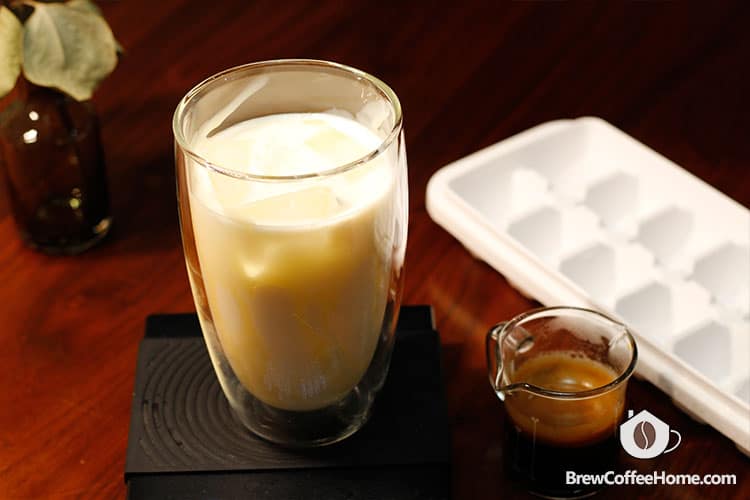
Half-fill the cup with cold milk and add your ice cubes.
Add the espresso shots
Pour your espresso over the milk. The coffee will slowly permeate through the milk, which looks beautiful and delicious. Stir the drink, and your iced Spanish latte is ready to enjoy.

Hot Spanish Latte Recipe

- Hot milk or steamed milk
- One or two teaspoons of sweetened condensed milk
- A single or double shot of espresso
- Espresso machine
- Six-ounce cup
Pour one teaspoon of sweetened condensed milk into your cup. For a sweeter drink, add two teaspoons.

Pull an espresso shot
Position your cup beneath the portafilter and pull your espresso shot directly into it. For a stronger coffee, pull a double shot. Stir to mix the hot coffee with the milk.

Steam your milk
Using your espresso machine’s steam wand, steam your milk. Keep in mind that the texture doesn’t need to be identical to a standard latte. If you’re not using an espresso machine, heat the milk in a microwave, then use either a whisk or a handheld milk frother to create a creamy texture.

Pour the milk over the espresso and condensed milk
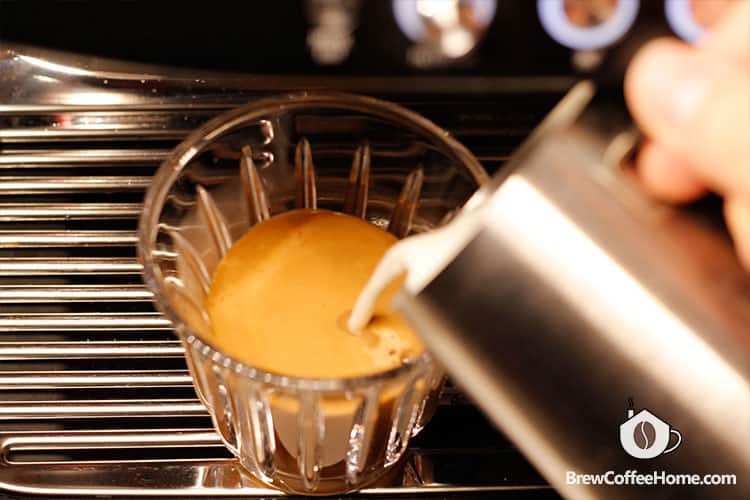
Pour the frothed milk into the cup. You can make latte art if you’d like to. Enjoy your drink!
There you go, a delicious coffee recipe for a hot Spanish latte.
As you can see from the two recipes, they use the same ingredients. The hot Spanish latte has a similar flavor to a regular latte, though it is slightly sweeter. However, it’s not quite as sweet as a regular latte with syrup.
Final Thoughts
Creating recipes that combine robust coffee with sweetened condensed milk is not new. However, if you’ve yet to sample Spanish latte, you’ll notice that the bitter flavor of the coffee mellows, while the sweetness is more pleasant than adding sugar.
Spanish latte is a great option for people who would rather not have a coffee with flavored syrup but still want a drink with a sweeter flavor. If that applies to you, it’s well worth attempting at home or ordering next time you see it on a coffee shop menu.
If you’re making a Spanish latte at home, you can’t really go too far wrong – it’s simple to make, has options for either hot or cold weather, and most importantly, it’s absolutely delicious!
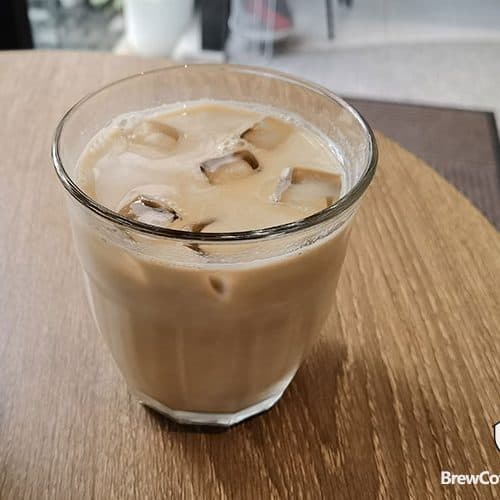
This recipe will show you how to make hot and iced Spanish latte at home.
- or strong coffee
- sweetened condensed milk
- for iced Spanish latte
- for hot Spanish latte
- Pull a shot of espresso or make a cup of strong coffee with your coffee maker.
- Add two teaspoons of condensed milk into the cup.
- Fill half cup of milk and as many ice cubes as you want into the cup.
- Pour your espresso shots or strong coffee over the milk.
- Add one or two teaspoons of condensed milk into your cup.
- Pull single or double shots of espresso directly over the condensed milk in the cup, stir to mix them.
- Steam milk, or heat the milk using a microwave. If you like a creamy texture, you can froth milk with a handheld milk frother or using the steam wand on your machine.
- Pour the milk over the espresso and condensed milk mixture.
- Traditional Spanish latte uses espresso. If you don’t have an espresso machine, you can use Moka pot or Aeropress to brew strong coffee for this recipe.
- We prefer using a bigger cup for iced Spanish latte and a smaller cup for hot coffee. You can use any cups you like for this recipe and adjust the amount of coffee and milk.
iced spanish latte, spanish latte
Let us know how it was!
Латте — напиток, знакомый каждому, но его вариаций так много, что, наверно, нет ни одного человека, который знал бы каждую из существующих. Скорее, это даже невозможно, так как добавь один-два новых ингредиента и вот, новый рецепт. Но шансы, что он приживётся повсеместно, стремятся к нулю, в отличие от собранных для вас в этой подборке трех всемирно известных авторских латте.
Рецепт и история классического латте
Начать, очевидно, необходимо с самой вершины айсберга, которой по праву можно считать эссе «Итальянские путешествия» Уильяма Дина Хауэллса, описывающие Италию последней трети 19 века. В нем рассказывается о менее крепком кофейном напитке, нежели капучино, которой подают туристам в Италии. Именно это упоминание считается беспрецедентным. Первым предпринимателем, решившим добавить латте в меню и получать с этого выгоду, был итальянский эмигрант Лино Мейорину, открывший свой бар в городе Беркли, в США. Мировое признание латте получил в середине 20 века, благодаря высокой популярности среди американских потребителей.
Латте — продукт смешивания эспрессо и молока, а зачастую еще специй, орехов и даже некоторых овощей. Для классического рецепта используются только эспрессо и взбитое особым образом молоко. Тут все просто: наиболее предпочтительно пастеризованное молоко, жирностью 2,5-3,2%. Также ключевую роль играет температура, которая не должна превышать 65°C, иначе вкус напитка будет искажен запахом парного молока. Опускать температуру ниже 60°C тоже не рекомендуется, в противном случае вы рискуете остаться без стойкой молочной пенки. Если все необходимые условия соблюдены, осталось только аккуратно влить1 вспененное молоко в эспрессо и наслаждаться вкусом. А можно не останавливаться на достигнутом и попробовать, например, испанский латте.
Испанский латте
Несмотря на название, напиток пользуется большей популярностью на ближнем востоке, в северной Африке и ОАЭ, причём, на Эмираты приходится около половины от всех проданных напитков. Испанский латте довольно похож на кофе по-вьетнамски, такой же крепкий и сладкий, да и ингредиенты отчасти совпадают. А что касается названия – до конца не ясно, почему так вышло. Предположительно, первые потребители наткнулись на данный экзотический напиток в Мадриде. Почему экзотический? Довольно просто: в его состав, помимо эспрессо и молока, добавляют сгущенное молоко и зачастую кубики льда, то есть подают холодным.
Чтобы повторить этот рецепт используя кофе из разряда спешелти, необходимо влить двойной эспрессо или 100-120 мл крепкого кофе, в чашку со сгущенкой (полторы чайных ложки) и залить все это вспененным молоком. По желанию можно добавить несколько кубиков льда.
Если подобное сочетание кажется вам недостаточно многогранным, то можете обратить внимание на пряный, тыквенный латте.
Тыквенный латте
Эта интерпретация считается традиционно осенним видом напитка,и на то есть объективные причины: прямая ассоциация тыквы с Хэллоуином и именно этим временем года у жителей англоговорящих стран. Сам рецепт довольно новый, придуманный2 в 2003 году одним из сотрудников всемирно известной кофейни, для осеннего меню. Различия с классическим рецептом кардинальные, новый состав включает в себя тыквенно-пряный соус, корицу, гвоздику и взбитые сливки. Но, как мы уже знаем, сколько бариста, столько и видов тыквенного латте, так что вариаций не сосчитать. Мы с удовольствием предложим вам приготовить одну из них.
Для начала поставьте молоко на огонь и добавьте 25 граммов мякоти тыквы. медленно помешивая, доведите до кипения. Далее понадобятся специи: корица, мускатный орех, кардамон, чили, шафран. Снимите с огня, добавьте двойной эспрессо, сахар по вкусу и взбейте до однородной консистенции. Взбитые сливки придадут нежности и пикантности осеннему латте.
Фисташковый латте
Если предыдущий рецепт, без сомнения, осенний вариант, то фисташковый латте — определенно зимний. Благодаря использованию фисташковой пасты, кофе получается очень полнотелым, калорийным и даже сытным. Между прочим, массовым этот продукт стал позже всех из представленных в подборке. Но, вполне вероятно, что жители Ирана пили так свой латте еще в 20 веке. Ведь сегодня Иран – один из самых крупных поставщиков фисташек.
Для приготовления фисташкового латте нам потребуется: фисташки, свежесваренный эспрессо и молоко. Причем, наиболее подходящим сортом для этого рецепта является кофе из центральной или южной Америки, так как шоколадные и карамельные нотки отлично раскрывают вкус ореха. Для начала приступим к приготовлению фисташковой пасты. Орехи необходимо промыть несколько раз, очистить и обжарить на сухой сковородке, также можно подсушить их в духовке. Далее измельчаем до состояния пасты, кладём на дно чашки и заливаем эспрессо, после — молоко. Готово!
Резюме
Латте — напиток, который по сей день подвергается невероятному количеству изменений любителями кофе со всех уголков мира, но, несмотря на это, большинство людей предпочитают его классический вариант. Можно ли изобрести еще более эстетичное и лаконичное сочетание, чем латте? На наш взгляд, классический рецепт довольно сложно испортить какими-либо вкусовыми добавками3, так что советуем не бояться экспериментировать. Может, вы задумывались о создании или даже давали пробовать друзьям своё личное произведение на основе латте? Поделитесь им и с нами!
1 Об истории латте-арта, особом способе вливания молока в эспрессо, написали статью.
2 Как придумать авторский напиток для кофейни читайте здесь.
3 Про добавки, которые хорошо сочетаются с кофе, рассказали в статье.