
- Увеличение минимальной цены на кофе Fairtrade
- Слова Моники Фирль, старшего менеджера по кофе в Fairtrade International
- Кофе и справедливая торговля
- Преимущества для кофефермеров
- Fairtrade Метка
- Сертификация Fairtrade
- Гарантии Fairtrade
- Fairtrade coffee is not more expensive
- Not just anyone can use the Fairtrade logo on their coffee and call it ethical
- You can be confident that Fairtrade coffee is exactly what we say it is
- Fairtrade supports coffee farmers in improving their products
- Gender equality and Fairtrade coffee
- The Fairtrade coffee farmers are learning to live with the climate crisis
- When you choose Fairtrade, you’re part of a global community fighting for climate justice – and a fairer, better world.
- A Fair Trade Powerhouse
- The Complexity of Certification
- Diversity of Fair Trade Origins
- Fair Trade and National Chain Markets
- Recent Fair Trade News
- Disagreement Among Fair Trade-Certifying Bodies
- Where Does Fair Trade Coffee Come From?
- How Does Fair Trade Coffee Help Coffee Farmers?
- How Does Fair Trade Coffee Affect The Environment?
- Sustainable coffee usually means better taste
- Wildlife is better preserved with fair trade coffee production
- Di Stefano’s Final Word On Fair Trade Coffee
- Improving Lives and Communities
- Just As Good (and Better) Than Non-Fair Trade
- Fair Trade Can Benefit the Environment
- Fair Trade Coffee Tips From Philly Fair Trade Roasters
- How Philly Fair Trade Roasters Does Fair Trade and Sustainability
- How Do You Know if What You’re Drinking is Really Fair Trade?
Увеличение минимальной цены на кофе Fairtrade
30 марта 2023
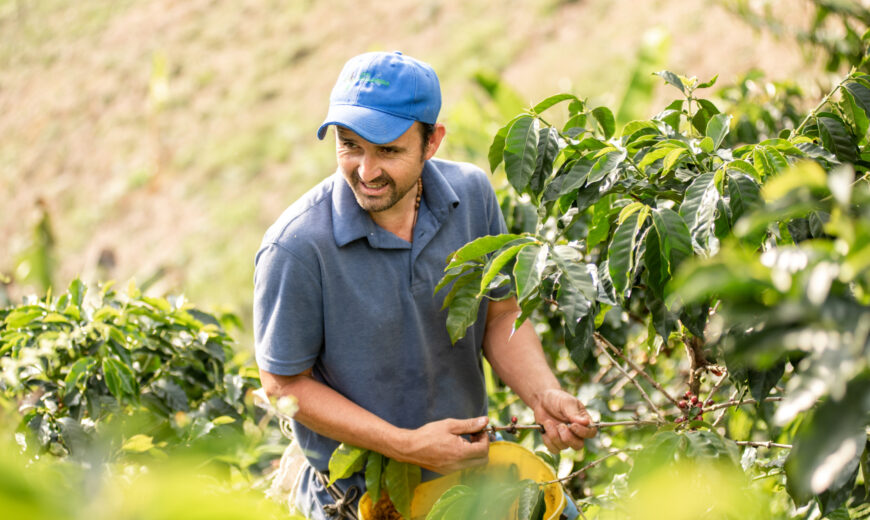
БОНН, Германия – Fairtrade увеличит свою минимальную цену на кофе с целью укрепления защиты кофейных фермеров по всему миру в условиях нарастающего влияния изменения климата и увеличивающейся глобальной экономической волатильности, сегодня подтвердила организация социальной справедливости.
Новые цены Fairtrade, которые вступят в силу для контрактов, заключенных с 1 августа 2023 года, увеличат базовую цену на 19 процентов и 29 процентов соответственно для сертифицированного кофе Robusta и Arabica. Это обеспечит фермеров значительной поддержкой управления рисками цены в условиях диких рыночных колебаний и адаптации к их потребностям, поскольку они сталкиваются с инфляцией в своих странах и значительными дополнительными затратами на адаптацию к изменению климата. Новая минимальная цена на мойку бобов Arabica – которая составляет более 80 процентов всего проданного кофе Fairtrade – составляет 1,80 доллара за фунт, увеличившись на 40 центов по сравнению с предыдущей ценой 1,40 доллара за фунт. Для натурального Robusta цена увеличится на 19 центов до 1,20 доллара за фунт. Дополнительная стоимость органического кофе Fairtrade была увеличена на треть, с 30 центов до 40 центов за фунт. Более половины проданного кофе Fairtrade в 2021 году также были сертифицированы как органические.
Слова Моники Фирль, старшего менеджера по кофе в Fairtrade International
Несмотря на недавние всплески глобальных цен на кофе, кофейные фермеры борются с инфляцией, стремительно растущими затратами на производство и потерями урожая из-за последствий изменения климата. Многие кофейные фермеры покидают свои фермы в поисках других возможностей, а молодые люди сегодня в кофейных общинах борются, чтобы увидеть будущее в кофе. Тот факт, что фермеры не могут зарабатывать на жизнь на кофе, является трагическим комментарием к отрасли и огромным риском для будущего мирового кофейного сектора в целом, – заявила Моника Фирль.
С новой минимальной ценой Fairtrade взаиморасчетов Fairtrade предлагает кофейным фермерам и их кооперативам сеть безопасности ценообразования, лучше адаптированную к неопределенным временам, в которых мы живем, оставляя им возможность зарабатывать больше при ценах на рынке выше минимальной цены Fairtrade, – продолжила мисс Фирль. Это важный инструмент, который кофейные фермеры должны иметь возможность использовать, чтобы найти новую стабильность в своем деле.
Сеть Fairtrade по кофе в мире огромна и разнообразна, она включает почти 900 000 сертифицированных кофейных фермеров из более чем 650 производственных организаций в 31 стране. Кроме защитной поддержки минимальной цены Fairtrade, сертифицированные фермеры также получают премию – дополнительную сумму денег, которая коллективно инвестируется в проекты по улучшению производительности, адаптации к изменению климата, качества, инфраструктуры и базовых общественных услуг, определенных как приоритеты самими фермерами и их организациями. С 2017 года производственные организации, сертифицированные Fairtrade, заработали более 400 миллионов евро на премии, которые они инвестировали в различные инициативы, охватывающие развитие бизнеса, инфраструктуру и улучшение сельского хозяйства, а также социальные услуги.
Однако кофейные фермеры по-прежнему сталкиваются с серьезными проблемами. Согласно доступным данным, крошечные фермеры производят 60 процентов всего мирового кофе, но почти половина из них живет в бедности; почти четверть находится в крайней нищете. И хотя цены на кофе в 2022 году были относительно высокими, прибыль в конечном итоге не смогла достичь самих фермеров. Фактически, исследования показывают, что производители обычно сохраняют около 1 процента от розничной цены на кофе, что для чашки кофе стоимостью 4 доллара США составляет около 0,04 доллара США за чашку.
Минимальная цена Fairtrade критически важна для кофейных фермеров, так как она смягчает их от непредсказуемых колебаний на рынке кофе. Но ситуация, с которой сталкиваются кофейные фермеры во всем мире из-за финансовых трудностей и изменения климата, остается неприемлемой и, честно говоря, ставящей под угрозу всё будущее кофе, предупредила Сильвия Гонсалес, менеджер никарагуанской кофейной производственной организации UCA Miraflor и член правления региональной сети производителей Fairtrade CLAC.
Выходя за рамки обязательной минимальной цены Fairtrade, организация также разработала Справочные цены на достойный уровень дохода от кофе для некоторых стран, указывая, сколько фермерам нужно получать, чтобы обеспечить достойный уровень дохода от кофе, при определенных параметрах. Покупателями поощряется платить эти цены на добровольной основе и поддерживать фермеров в движении к достижению достойного уровня дохода в рамках комплексной стратегии. Новая минимальная цена Fairtrade и органическая дифференциация в совокупности достигли эквивалентных вывозных значений Справочных цен на достойный уровень дохода в двух из четырех кофейных происхождений, для которых Fairtrade установил справочные цены: Колумбия и Уганда, оба для органического арабики. Для других двух происхождений новая минимальная цена Fairtrade и органическая дифференциация уменьшат разрыв до соответствующих справочных цен на достойный уровень дохода на 45 процентов (регион Ачех на Индонезии) и 46 процентов (Гондурас), соответственно. Помимо получения рекомендуемых цен, фермерам также нужно достичь других параметров, которые являются частью уравнения достойного уровня дохода, таких как устойчивый урожай.
Минимальная цена Fairtrade и будущее кофе
Кофе и справедливая торговля
Поскольку кофе торгуется на бирже под названием C Market, цена на кофе является волатильной и, в среднем, меняется каждые три минуты. Минимальная цена Fairtrade означает, что даже если рыночные цены снижаются, кофефермеры могут рассчитывать на заработок по этой цене, несмотря ни на что. Что происходит, если рыночные цены выше? Тогда кофефермер получает более высокую рыночную цену. Например, цены на C Market были ниже Минимальной цены в 52% случаев с 2011 года!
Преимущества для кофефермеров
Кофефермеры также получают дополнительную сумму – Fairtrade Premium. Это дополнительные деньги сверх продажной цены, которые кооперативы фермеров демократически выбирают, как вложить (например, в улучшение производства или общественные проекты, такие как школы, детские сады и медицинские учреждения).
Fairtrade Метка
Так что, когда вы видите мешок кофе с меткой Fairtrade на нем, вы знаете, что фермер за этими зерновыми зернами был гарантирована минимальная цена и что они проголосовали, как использовать Fairtrade Premium.
Сертификация Fairtrade
Существует все больше и больше брендов справедливой торговли кофе, из-за увеличивающегося спроса на справедливую торговлю кофе. Но что на самом деле определяет, был ли продукт действительно справедливо торговым?
Fairtrade (в одно слово) является зарегистрированным сертификационным знаком, и любой кофе, который хочет использовать метку Fairtrade, должен сначала соответствовать стандартам Fairtrade (набор социальных, экономических и экологических правил, которым необходимо соответствовать для прохождения сертификации). Эти стандарты разработаны для поддержки устойчивого развития малых производственных организаций и сельскохозяйственных работников и основаны на принципах уважения к людям и планете.
Гарантии Fairtrade
Вы можете быть на 100% уверены, что кофе с сертификатом Fairtrade именно такой, как мы говорим.
Канадцы действительно заботятся о этическом потреблении кофе и хотят знать, что их кофе РЕАЛЬНО приносит какую-то пользу.
Некоторые бренды справедливой торговли кофе делают большие заявления о справедливости, но как можно быть уверенным, что эти заявления достоверны?
Все продукты с меткой Fairtrade были независимо проверены FLOCERT, сторонним сертификатором, который проводит регулярные аудиты, чтобы убедиться, что стандарты Fairtrade соблюдаются. FLOCERT может и действительно отстранять или, в некоторых случаях, даже лишать сертификации производственные организации Fairtrade, если аудиты показывают, что стандарты Fairtrade не соблюдаются.
Это означает, что когда мы говорим, что покупка Fairtrade кофе поддерживает фермеров в получении более выгодного сделки, вам просто необходимо поверить на слово.
Developing more sustainable systems of trade is a global effort that involves brands, shoppers, governments, activists, and, of course, farmers. But too often, discussions and decision-making on how to make trade more sustainable leave out the voices of those most disadvantaged by those systems of trade.
Fairtrade advocates for the voices of farmers and workers to be heard and centred as decisions are made about their future.
Fairtrade is 50% owned by farmers and workers, and farmers and workers are actively consulted when establishing new standards and policies for Fairtrade. This means any decisions made about how Fairtrade works inherently involves the voices of farmers.
Fairtrade certified coffee is NOT more expensive
Canadian coffee culture is a thing, and while the cost of your favourite brew can vary depending on a few factors, just because it is certified Fairtrade doesn’t always mean that it is more expensive than non-certified products.
A full range of Fairtrade coffees are available in Canada, and many are available as retail private label or less expensive mainstream brands.
What does that mean? Well you don’t need to break the bank to switch to a responsibly-sourced coffee brand, and you can do good while staying within budget.
Check out our shop local page for some of the Fairtrade coffee brands you can choose from.
Fairtrade proactively encourages coffee farmers to improve their products
Coffee farming challenges are many, including dealing with the effects of climate change and the rising cost of producing coffee. Working with coffee farmers so they can sell more of their coffee on Fairtrade terms is a big part of what we do.
As part of our system, farmers must invest 25% of the Fairtrade Premium back into initiatives that help improve quality and productivity, which are fundamental ways of increasing farmers’ incomes and helping them sell more on Fairtrade terms. Because the better the coffee, the more demand there will be for their beans.
Producer Networks are local associations that represent small-scale farmers and workers who are part of Fairtrade certified producer organizations. Producer Networks work with coffee farmers to provide training and supports to help them improve the quality of their crops.
Many Fairtrade coffee farmers have won awards for their coffees and take great pride in the quality of their coffee beans.
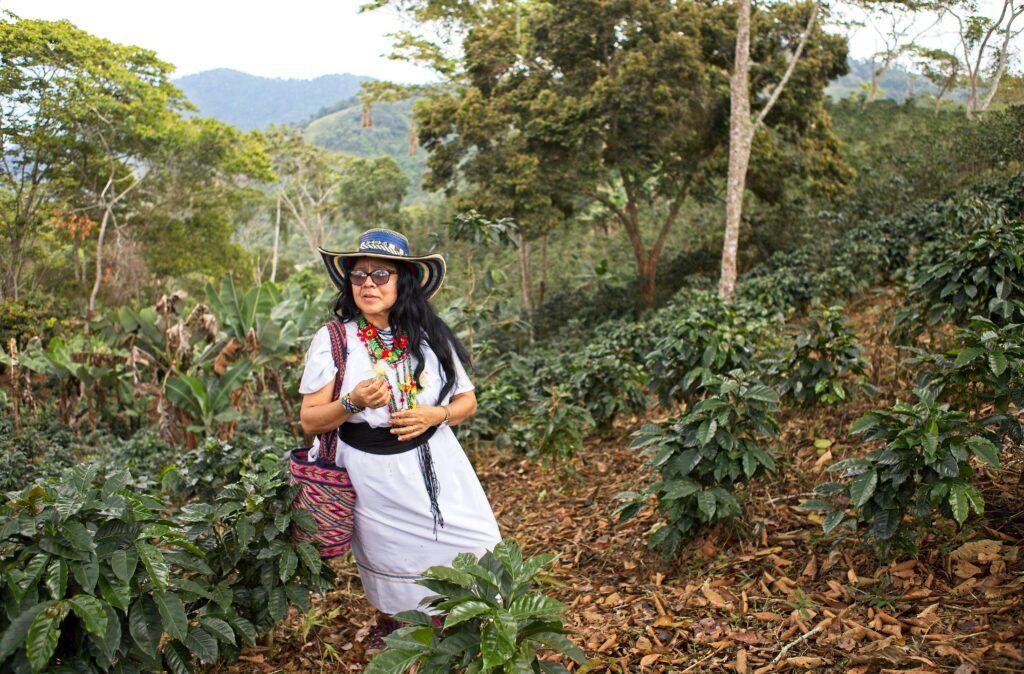
Aurora Izquierda, ANEI Coffee Cooperative, Colombia.
Fairtrade coffee helps protect the environment
Coffee farmers are at the frontline of climate change and often feel its effects through unpredictable weather patterns, pests, and crop failures. Sustainable trade must include protections for the environment and support for farmers addressing and mitigating the challenges of climate change.
Fairtrade certification is all about sustainable coffee production.
Fairtrade also provides free training and financial support to coffee farmers so they can produce more resilient crops and help them adapt, mitigate and become more resilient to the effects of climate change.
Fairtrade coffee promotes gender equality
How can you determine the social impact of fair trade coffee?
Well, coffee that is Fairtrade certified has met a set of social standards like the promotion of gender equality. The Fairtrade Standards include requirements like no discrimination based on gender or marital status, zero tolerance of abusive or exploitative behaviour, requirements to develop a gender policy, and programs to support disadvantaged and minority groups.
Producer Networks across many countries have also established women’s schools of leadership, enabling women to learn business, negotiation and finance skills. Many of the women go on to take on leadership and committee positions within their co-operatives and communities.
Fairtrade coffee stands against child labour
Fairtrade is committed to addressing the root causes of child labour and preventing the abuse and exploitation of children.
Poverty is the main cause of child labour, and the Fairtrade Minimum Price and Premium provide important financial security so farmers don’t need to fall back on their children to support them on the farm.
The Fairtrade Standards prohibit child labour, and through Fairtrade’s Producer Networks and our auditor FLOCERT, we identify high-risk areas and support producers to develop action plans and program to remediate child labour.
Coffee is one of the world’s most popular beverages. In the UK, we drink approximately 95 million cups of coffee per day, and it is a lucrative multi-billion pound business.
However, a closer look at the supply chain shows coffee is a complex and often unfair relationship with the person behind every bean – the farmer. Fairtrade drives a fairer, more sustainable way of trading.
Here, we dispel some of the misconceptions about Fairtrade coffee.
Fairtrade coffee is not more expensive
Sustainability doesn’t have to come at a price. You can find a variety of Fairtrade coffee for sale in the UK, and it won’t cost the earth.
Many major supermarkets now have Fairtrade own-label coffee in their value ranges, including M&S, Waitrose and Co-op, so that Fairtrade farmers can enjoy the benefits of Fairtrade certification.
All the coffee at Greggs is Fairtrade, and it’s the cheapest place to buy takeaway Fairtrade coffee on the high street. With many supermarkets and brands selling Fairtrade coffee, the sums don’t add up for those saying it’s more expensive, and in many cases, it isn’t.
We’ve been working with our retail partners to offer Fairtrade products at accessible prices so that you can enjoy a Fairtrade coffee wherever you shop.
Not just anyone can use the Fairtrade logo on their coffee and call it ethical
The FAIRTRADE Mark is a registered certification label for coffee sourced from Fairtrade producers in low-income countries, such as Kenya and Nicaragua.
Coffee that displays the Mark must meet Fairtrade Standards, which incorporate a holistic blend of social, economic and environmental criteria.
If a company wants to sell Fairtrade certified coffee (and have the FAIRTRADE Mark displayed on its packaging), they first have to make sure that the coffee meets all of the Fairtrade Standards.
You can be confident that Fairtrade coffee is exactly what we say it is
The FAIRTRADE Mark (or logo) on a product means that the Fairtrade ingredients in that product have been independently verified by FLOCERT, an independent certifier accredited by the International Organisation for Standardization (ISO).
Independent certifiers audit producers, traders and companies to check compliance with our economic, social and environmental standards, including that farmers and workers receive the Fairtrade Minimum Price and Premium.
So, when it comes to Fairtrade products, including coffee, when we say that buying it is supporting farmers to get a better deal, you don’t just have to take our word for it.
Fairtrade certification system is rigorous, independent, and in line with best-in-class certification practice.
Fairtrade supports coffee farmers in improving their products
On top of the price they get for their coffee, Fairtrade farmers also earn a ‘Fairtrade Premium’ to invest in projects that will benefit their business or community.
Fairtrade coffee farmers invest at least 25 per cent of the Premium into initiatives to improve quality and productivity, which can help to increase farmers’ incomes.
Over the years, many Fairtrade coffee producers have won Cup of Excellence awards and several Fairtrade coffees on sale in the UK have also won various taste awards.
In total, Fairtrade coffees have won over 28 Great Taste Awards – which is a testament to the quality achieved.
Gender equality and Fairtrade coffee
Studies show that while women’s participation in farming has increased over time, women have less access to resources such as land, inputs, information, credit and training. Fairtrade Standards are designed to increase female participation and support more women and girls to access the benefits of Fairtrade.
Producer networks are rolling out women’s schools of leadership for farmers, enabling women to deepen their business, negotiation and finance skills.
The Fairtrade Standards encompass requirements on gender justice, including no discrimination based on gender or marital status, zero tolerance of abusive or exploitative behaviour, developing a gender policy, and programmes to support disadvantaged and minority groups.
The Fairtrade coffee farmers are learning to live with the climate crisis
Around 125 million people worldwide depend on the coffee we drink for their livelihoods. And yet, every time we have a sip of our favourite brew, we probably don’t think about the journey from ground to grind. Coaxing a crop out of some of the steepest farmland in the world is no mean feat. And that’s not all.
Coffee is a boom-and-bust commodity sold on an inherently unstable market with widely fluctuating prices.
Not only has the price been consistently low in recent years, but coffee farming is also getting harder as a changing climate brings extreme and unpredictable weather, more pests and faster-spreading diseases.
In fact, by 2050, as much as 50 per cent of the global surface area currently used for coffee farming may no longer be suitable, experts believe.
And so, the climate crisis is an immediate and ever-increasing threat to the livelihoods of farmers and workers across the world.
Fairtrade provides free training and financial support to produce more resilient crops and help farmers adapt, mitigate and become more resilient to the effects of climate change.
When you choose Fairtrade, you’re part of a global community fighting for climate justice – and a fairer, better world.
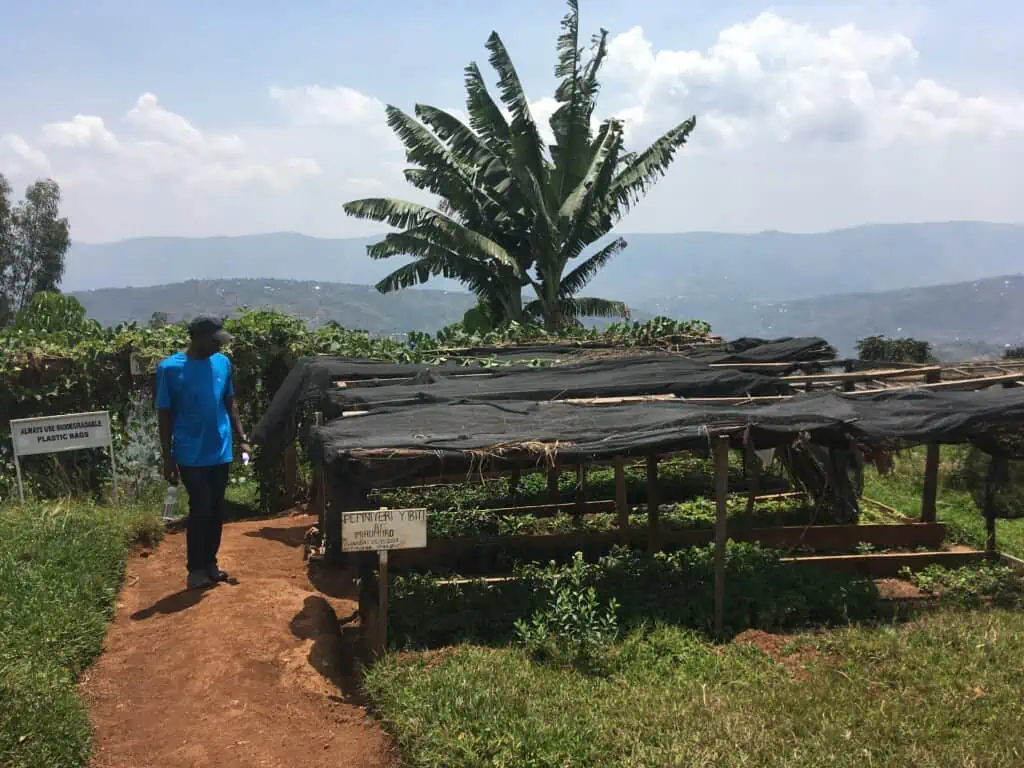
A farmer in the Dukundekawa Cooperative in Ruli, Rwanda, in the Gakenke District. Courtesy of Three Keys Coffee.
Although the term “fair trade” has been in use for over 75 years, it is not linked to one specific group or organization. Conceptually, fair trade is a global movement that includes producers, consumers, various nongovernmental and nonprofit organizations, and for-profit businesses; it is a system designed to build a more equitable trading model for a range of products, including coffee. In 1973, the first fair-trade-identified coffee was purchased from smallholder farms in Guatemala by a Dutch organization called Fair Trade Original. By 1988, a new fair trade label, Max Havelaar, was established in the Netherlands. The name came from the protagonist in the 1860 novel Max Havelaar, who opposed the exploitation of coffee workers in Dutch colonies. The character fought against the corrupt Indonesian government on the island of Java, which was a Dutch colony at the time.
In 1997, Fairtrade International (originally the Fairtrade Labeling Organization) was established to unite the fragmented fair trade movement behind a common set of standards. A separate organization called FLOCERT, established in 2003 in Germany, uses Fairtrade International’s standards to certify the production process and audit the sales of products. In 1998, Fair Trade USA (known at the time as TransFair USA) was founded and worked in collaboration with Fairtrade International for 13 years as one of 19 national member organizations. In 2012, Fair Trade USA decided to separate from Fairtrade International, which allowed the organization to make its own rules.
The fair trade system is designed to help farmers gain access to a “fair” or economically sustainable price for their products. Coffee Review last reported on fair trade-certified coffees in November 2015. In the eight years since, we have continued to see an evolution of the coffee industry, bringing higher-quality specialty coffee to a broader range of coffee drinkers. Fair trade-certified coffee is intrinsically bound to this expansion. As this report demonstrates, we see a mirroring of everything that is happening in the wider coffee market within the fair trade segment.
This month, we considered nearly 40 coffees that passed through a fair trade certification process in one of many possible pathways and selected 11 coffees for review. Some of these are the highest-scoring among those we cupped, while others are supermarket brands that scored lower but are familiar to many.
A Fair Trade Powerhouse
The assortment of fair trade-certified coffees we evaluated this month, like the specialty coffee market as a whole, expressed a range of origins, flavor attributes and roast levels. The good news is that if you look for them, you can find outstanding fair trade-certified coffees, such as the complex and well-balanced 92-point Ethiopia Sidama Boa Bedegelo from Orange, Massachusetts-based roaster Dean’s Beans. The package bears the seal of the Fair Trade Federation, which is a trade association of fair trade enterprises committed to equitable and sustainable trading partnerships. Dean’s Beans’ roastmaster and green coffee buyer, Brendan Walsh, says, “We’ve been committed to fair trade since Dean founded the company in 1993. As we see it, fair trade certification is a much-needed aid to millions of small-scale farmers around the world.”
Perhaps not surprisingly, four of the fair trade coffees reviewed for this month’s report are from Ethiopia, an origin known for its massive fair trade-certified cooperatives, a diverse range of indigenous heirloom coffee varieties, and expressive, often floral-toned flavor profiles. Another 92-point Ethiopia coffee, Gerbicho Lela, with sweet citrus and a tea rose-like floral quality, was submitted by Noble Coffee Roasting in Ashland, Oregon.
The Complexity of Certification
There were a handful of other roasters who sent in coffee for this month’s report who, like Noble, purchased fair trade-certified coffee and supported the principles of the movement without themselves becoming a certified link in the supply chain. Albuquerque, New Mexico-based Red Rock Roasters, on the other hand, has been certified by Fair Trade USA since the early 2000s. Red Rock’s 90-point natural-processed Organic/Fair Trade Ethiopia Sidamo showed flavors of strawberry, honey-roasted nuts and dessert wine. This coffee was produced by the Oromia Coffee Farmers Cooperative Union, and with both roaster and cooperative certification, the entire supply chain is transparently fair trade.
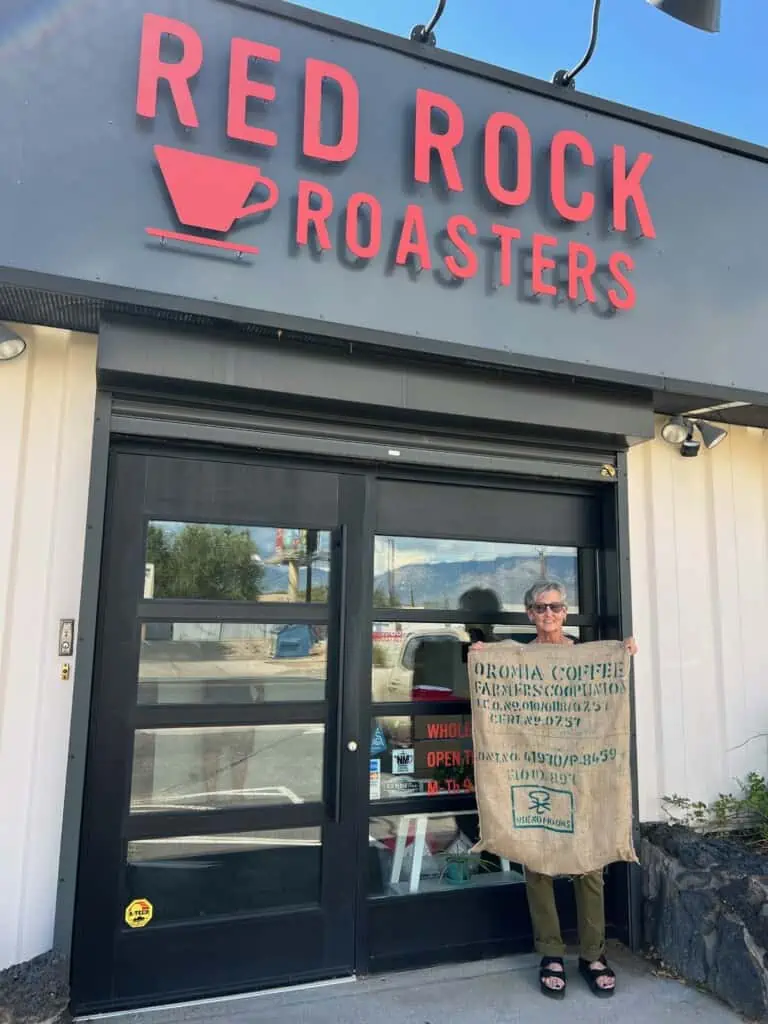
Albuquerque, New Mexico’s Red Rock Roasters is a fair trade-certified roaster. Courtesy of Red Rock Roasters.
Diversity of Fair Trade Origins
In addition to Ethiopia, we received entries from a variety of coffee-producing countries, including a solid 91-point submission from Rwanda roasted by Three Keys Coffee in Houston, Texas. This lively, fruit- and spice-toned Rwanda Reverb was produced by Rambagirakawa, an all-women subgroup of the Dukundekawa Cooperative. Although at the time of review, Three Keys did not hold fair trade certification, CEO Kenzel Fallen says that after years of sourcing fair trade coffee, the company just signed final certification documentation with Fairtrade America. Previously, she says, Three Keys was “of the mindset that because we knew the prices paid were well beyond fair trade minimums, we didn’t need to pay for a seal to prove that. However, many customers ask and look for a label for verification, so we decided this year to pursue formal certification because we want to take a more public stance to affirm our commitment and reassure our customers.” This notion of trusting the roaster seems to be a common sentiment where specialty roasters are concerned. Consumers can read about the coffee and make assessments based on price, but the addition of a fair trade seal supports a roaster’s message via an objective third-party verification system.
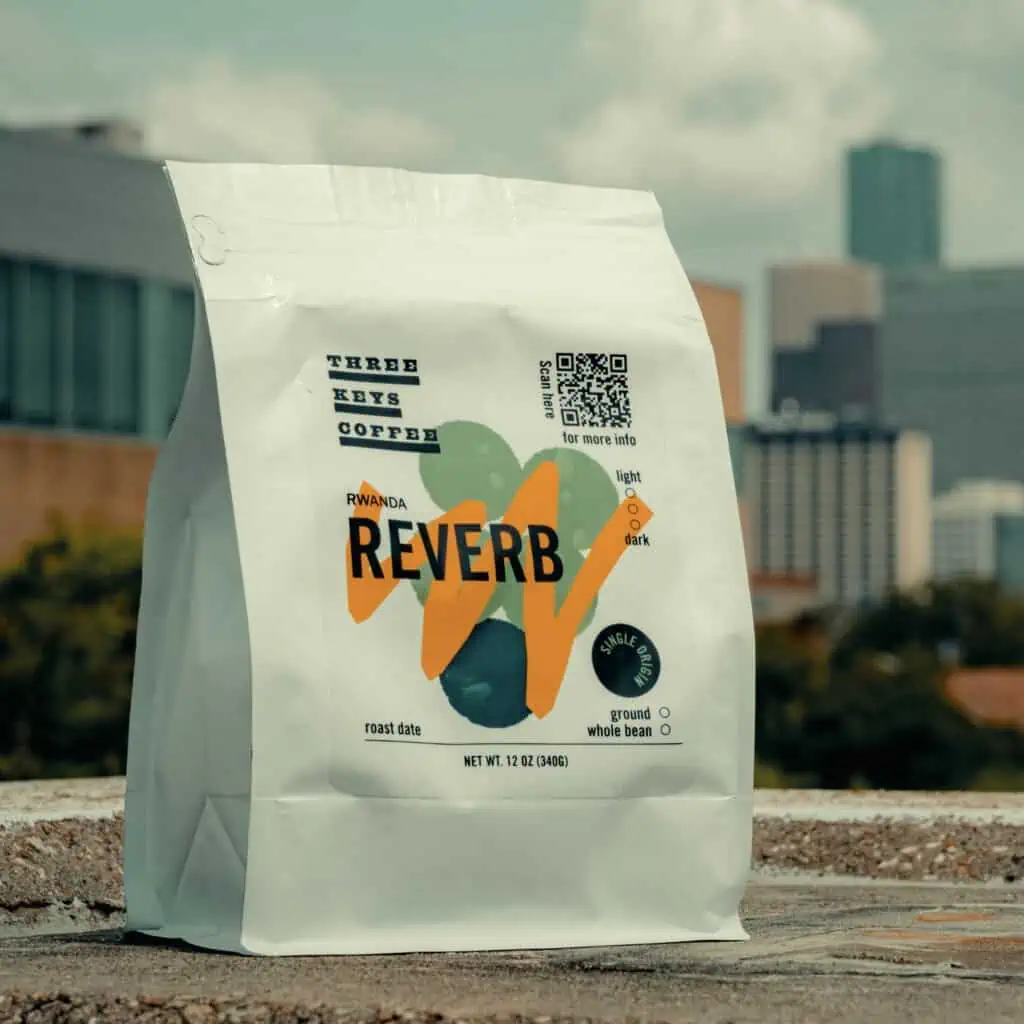
Three Keys Coffee Reverb is a fair trade-certified coffee from Rwanda. Courtesy of Three Keys.

Homer Alarcon is the producer of Amavida’s Peru Gesha Natural. Courtesy of Amavida.
Like Wonderstate, Santa Rosa Beach, Florida-based Amavida Coffee does not maintain fair trade certification, but its berry jam and sugar-sweet 91-point Peru Gesha Natural was also produced by a single farmer who is a member of a large fair trade-certified cooperative. Not only are these coffees delicious, but they are examples of fair trade-certified coffees from a diverse range of producing countries.
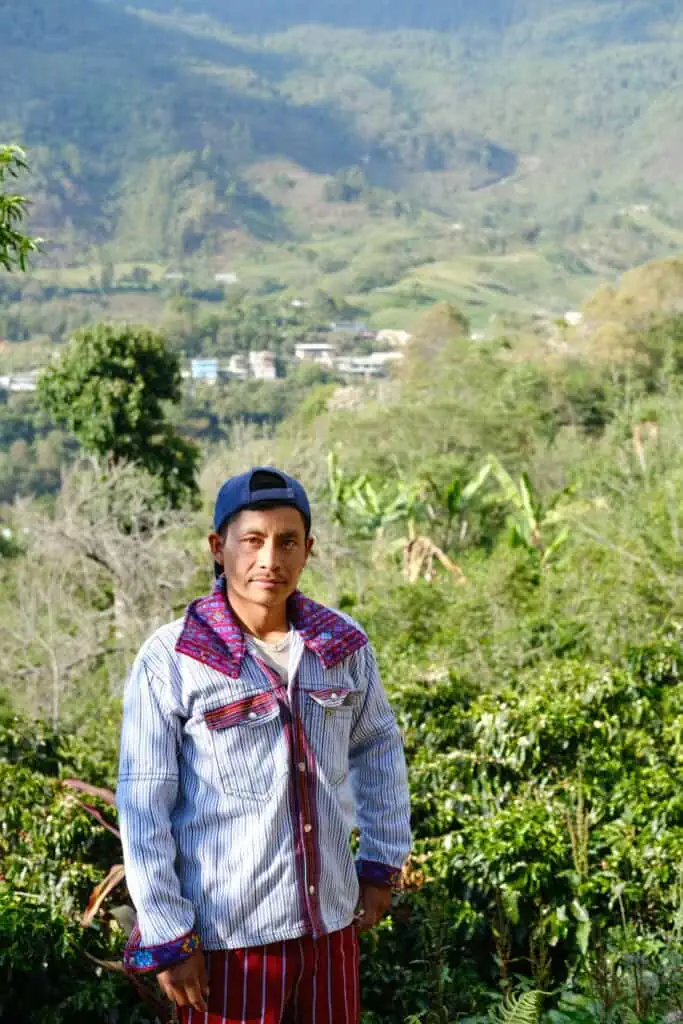
Porfirio Velasquez is the producer of Wonderstate Coffee’s Guatemala Tojquia, from the Huehuetenango region. Courtesy of Wonderstate.
Speaking of diversity, we evaluated a small number of fair trade coffees from the Indonesian island of Sumatra, another home for large fair trade-certified cooperatives. One of those lots rose above the rest, the deep-toned, accessible and subtly savory Sumatra Highlands coffee from Milwaukee, Wisconsin’s Colectivo Coffee (reviewed at 87 points). This coffee was grown in the Gayo Highlands on the northern tip of Sumatra in the Aceh Province by the coffee farmers’ co-op Kopepi Ketiara, and Colectivo’s website displays the Fair Trade USA seal.
A more unusual entry was the 92-point Kenya Endebess from Seattle, Washington-based Fulcrum Coffee Roasters. Famous for its washed-process coffees, Kenya produces very few coffees dried in the whole fruit. This coffee was produced by members of the Othaya Farmers Cooperative Society Limited. Again, with this coffee, the co-op holds fair trade certification but the roaster does not. These coffees round out the geographic circle of fair trade origins and further demonstrate the tremendous range of flavors that can be found within the fair trade subcategory of specialty coffee.
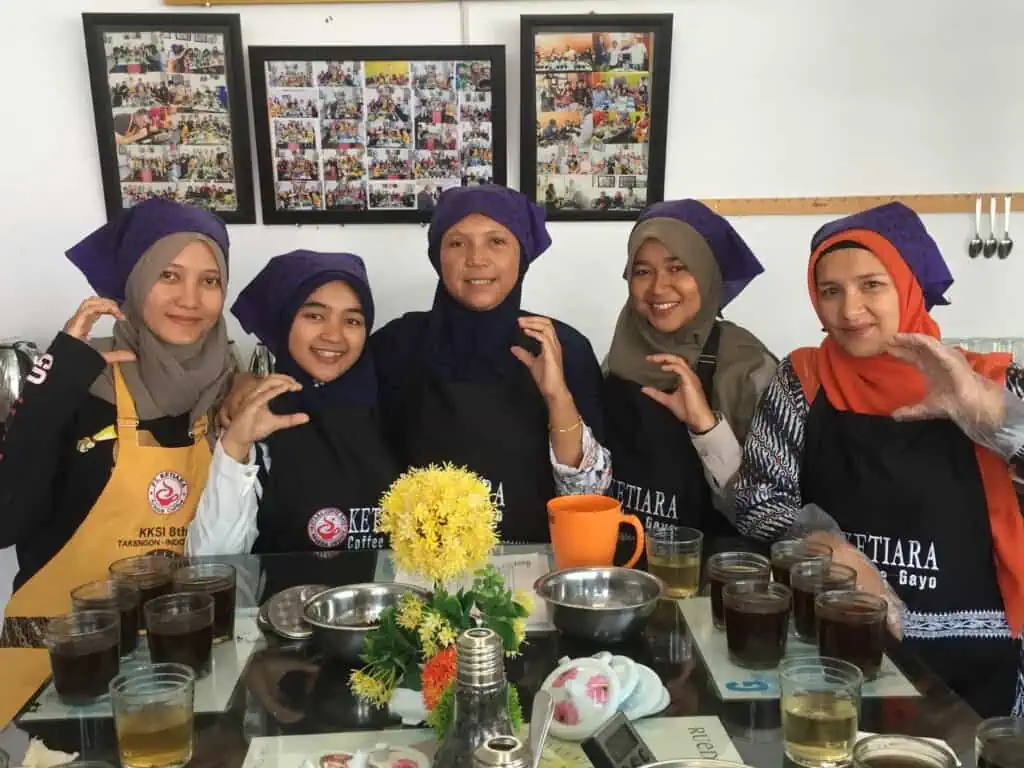
Women farmers of the Koperasi Ketiara Cooperative in the Gayo Highlands of Sumatra, Indonesia.
Fair Trade and National Chain Markets
Once a niche product found only in select natural food stores, fair trade coffee is now widely available to shoppers online and in traditional grocery stores and supermarkets, particularly in North America and Europe. We would be remiss to ignore the assortment of fair trade coffees that can be found at some of these large national grocery chains. Those who seek fair trade-certified coffee in grocery and big box stores are typically presented with a small collection of often darker-roasted options. Just as with non-certified coffees, it is more challenging to find lighter-roasted single-origin fair trade options. Although these next three coffees do not dazzle in the way that some of the previous samples do, they are serviceable choices that many coffee drinkers will certainly appreciate.
We start with a pair of house brands that can easily be found at the ubiquitous Whole Foods Market. Allegro Coffee, the Thornton, Colorado-based specialty coffee subsidiary of Whole Foods, roasted the crisply chocolaty 85-point Colombia El Premio de Timana. Another Whole Foods entry comes from the company’s 365 house brand, the simple but softly sweet 82-point Hometown Blend. Curiously, this is one of just a few blends that came across our cupping table, yet it was an example of an easy-drinking, value-forward fair trade-certified coffee among other blends that were so darkly roasted that nothing but charred flavors remained in the cup. Both of these widely available coffees were purchased at the Whole Foods Market in Oakland, California, and are likely available in many other locations. In neighboring Alameda, California, we purchased a couple of fair trade coffees from Trader Joe’s, including the house brand’s Organic Fair Trade Shade Grown Ethiopian, which we rated 83. Although lacking specific origin details, this staunchly dark-roasted coffee yields soft hints of dried fruit, along with more pronounced flavors of lightly smoky walnut and carob.
Recent Fair Trade News
On Aug. 1, 2023, Fairtrade International implemented a change to its pricing guidelines for coffee. For the first time in a dozen years, the floor price and organic premium for fair trade-certified coffees were increased. With the cost of living gradually escalating year over year, and the more recent global inflationary spike we all have been witnessing, there are some who argue that this increase is very late in coming. It is, however, a sudden and significant increase in the cost of goods that surprised many fair trade roasters and importers.
For washed Arabica coffee, the baseline price will increase by 29 percent, with an additional 33 percent increase for the organic premium. There is also a more modest but still significant 19 percent increase for lower-valued Robusta coffees. What does this boil down to in dollars and cents? For fair trade and organic-certified washed Arabica coffee, the floor price has gone up from $1.70 USD per pound of green coffee to $2.20, with an additional 20 cents per pound social premium provided to the cooperative to be spent in whatever way the organization decides. This new $2.40 base price for fair trade- and organic-certified Arabica coffee is for free on board (FOB) terms, which excludes costs associated with insurance, storage, transportation, importer margin, interest and certification fees.
For context, over the past five years, the price for commercial (non-specialty) Arabica coffee traded on the volatile New York Board of Trade commodities market has fluctuated dramatically between $0.87 and $2.55 per pound. No matter how low the commodity market drops, fair trade-certified growers are guaranteed a minimum price that is intended to cover the cost of production. During periods of high commodities pricing, fair trade prices typically increase due to supply and demand dynamics from within and outside of the fair trade system.
Disagreement Among Fair Trade-Certifying Bodies
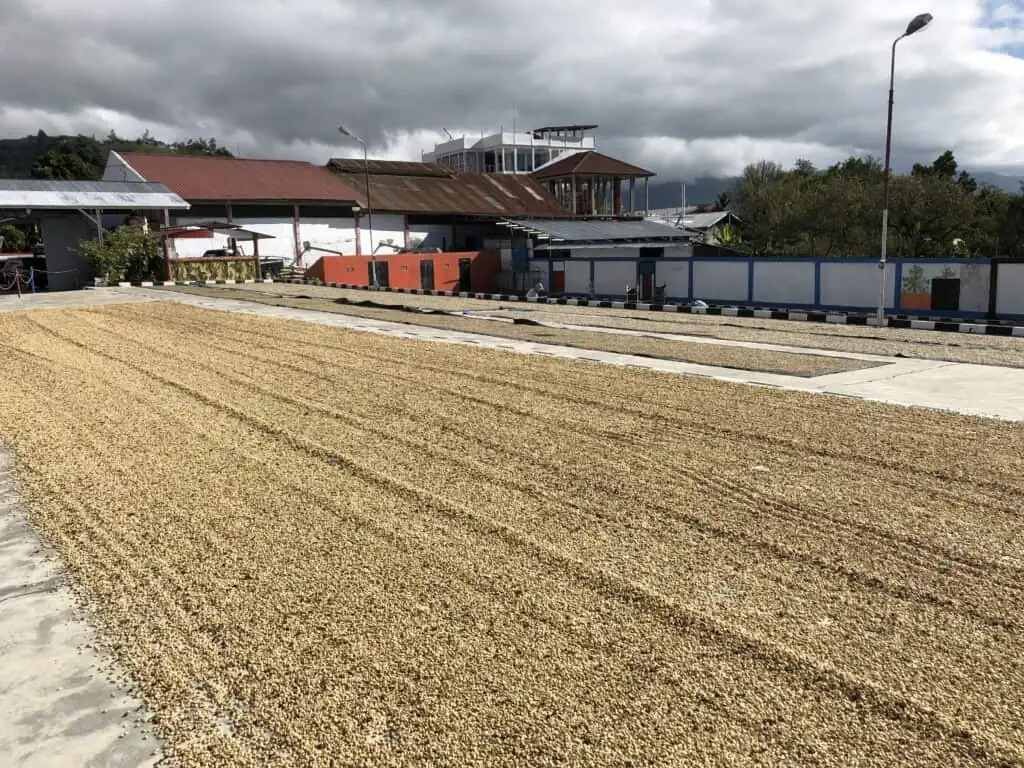
Coffee drying in the sun on concrete patios at the Dukundekawa Cooperative in Ruli, Rwanda, in the Gakenke District.
Although deciphering fair trade programs is becoming more nuanced, buying certified coffee is still a way to support a movement that helps farmers achieve sustainability in business. One of the fair trade movement’s greatest challenges has been to increase demand for certified coffees. Currently, many of the 900,000 FLOCERT-certified coffee farmers located in 31 different countries sell only a portion of their produce under fair trade terms. The remainder is sold into the market at prevailing prices, which sometimes fall below the cost of production. Choosing to buy coffee from a roaster that pays more to the grower, whether through the fair trade system or not, is one way to ensure coffee farmers are getting a fair shake.
An estimated 1.6 billion cups of coffee are brewed daily, however, coffee drinkers are often unsure about the origin of their coffee.
Coffee production varies year on year, which can cause serious consequences for those who depend on coffee farming for their livelihood.
So what is fair trade coffee? And, how does fair trade coffee affect the environment?
Fair trade coffee means that the coffee bean has been examined throughout the entire supply chain to meet specific sustainability and labor standards.
It focuses on small producer organizations and ensures coffee farmers who grow fair trade coffee beans receive a fair price while protecting their communities and the environment. When market prices fluctuate, fair trade coffee guarantees coffee growers pay the Fair trade Minimum Price for their produce.
Where Does Fair Trade Coffee Come From?
The fairtrade coffee movement began in the late 1980s when Mexican coffee farmers struggled with the collapse of coffee prices.
How Does Fair Trade Coffee Help Coffee Farmers?
Fair trade certified coffee helps approximately 800,000 coffee farmers receive a sustainable price for their coffee. This protects coffee farmers from sudden price drops and allows them to make more income, ultimately leading to a better quality of life.
Coffee farmers also receive a fairt rade premium, which is an extra sum of money given to workers as an additional bonus so they can invest in projects of their choice.
Fair trade allows farmers to negotiate in trade and reach a larger market because it supports small producer organizations — such as cooperatives and associations — so they can function independently and productively.
How Does Fair Trade Coffee Affect The Environment?
What is fair trade certification? To become fair trade certified, farmers must increase soil and water quality, avoid chemicals, manage waste, and decrease greenhouse gas emissions.
Like organic certification, fair trade certification assures you know where your coffee comes from.
Sustainable coffee usually means better taste
Fair trade Organic coffee ensures coffee growers use sustainable production methods and that the coffee beans are picked by hand. Therefore, only the best beans are selected, leading to a higher-quality taste.
Fair trade Organic coffee beans are also grown without the use of pesticides or harmful chemicals, so they keep all their nutrients and delicious flavour, like our Distefano medium roast.
Wildlife is better preserved with fair trade coffee production
Many coffee farms destroy natural habitats, causing a decline in biodiversity. Fair trade ensures farmers protect the habitats of animals and increase the nutritional value of the soil, allowing wildlife to thrive.
Di Stefano’s Final Word On Fair Trade Coffee
Di Stefano offers premium Fair trade Organic Coffee that encompasses tastes of kiwi, lime, and nashi pear to deliver an excellent coffee experience that can be enjoyed at any time of the day.
We aim to provide a product that has a positive environmental impact and improves overall well-being.
Taste better quality coffee while making an ethical environmental choice with Di Stefano coffee today! Have a Nespresso machine? Try our fairt rade coffee pods!
Fair trade coffee has been certified by one of a handful of fair trade monitoring and certifying organizations that ensures growers receive a fair price for their coffee, higher than the commodity price and intended to promote a sustainable lifestyle for farmers and growers.
The most common fair trade organizations are Fairtrade America (a branch of Fairtrade International) and Fair Trade Certified, each of which certify coffee and other consumer goods to their own similar fair trade standards.
While fair trade isn’t the end-all-be-all in quality coffee – growing organically and with conservation best-practices is important too – it does ensure that your morning coffee helps provide a sustainable lifestyle for coffee growers around the world who would otherwise deal with challenging growing conditions and market fluctuations well beyond their control.
Fair trade organizations also frequently support sustainable farming practices and environmental best-practices, as well as prohibiting child labor.
Ultimately, fair trade practices aim to make smaller farmers active participants in the world marketplace, less prone to unstable market prices and with more investment in how their product goes to market.

Improving Lives and Communities
First and foremost, fair trade practices improve the lives of farmers and workers.
Fair trade farmers are paid a fair price for their coffee, helping to create a more sustainable wage and lifestyle, and in many cases, lift growers and workers out of poverty.
Fair trade minimum prices are set above the market price for commodity coffee, meaning that farmers are guaranteed to earn a living wage even if the market price of coffee is low. Fair trade also seeks to provide farmers with a premium that they can then redeploy to invest in their farms, their employees, and their communities. For many small growers, this might include buying new equipment, improving infrastructure, or providing education for the next generation.
In addition to paying farmers a fair price for coffee, fair trade practices generally ensure that farm workers have access to safe working conditions, fair employment practices, and child labor restrictions.
Fair trade coffee can also help to promote social justice progress!
For small-scale producers, some fair trade standards require an organizational structure that allows members and even workers access to democratic decision-making processes and broader participation in the activities of the organization, with transparency.
Just As Good (and Better) Than Non-Fair Trade
Fair Trade Coffee is just as good as non-fair trade coffee, and it’s frequently better tasting and higher-quality.
Fair trade has nothing to do with coffee quality or grading, but farmers and producers who committee to fair trade practices generally take their growing and process more seriously. Fair trade coffee just tends to be produced with more care and attention to detail; fair trade coffee farmers tend to be more passionate about their work; and they take pride in producing a high-quality product.
In our experience at Philly Fair Trade, this passion and attention to detail is often evident in the taste of fair trade certified coffee, too.
Fair Trade Can Benefit the Environment
While many fair trade certifications don’t specifically require sustainability practices, some standard-setters (like Fairtrade International’s Fairtrade Standards) require a commitment to sustainable farming practices that protect the environment.
As such, fair trade coffee can benefit the environment in a number of ways. This can include practices such as using less water, avoiding the use of harmful pesticides, soil-conservation to reduce run-off and erosion, and reduced deforestation as farmers are encouraged to plant trees on their land.
And even for those farms that aren’t necessarily adhering to deeper organic standards, the same farms that lean into fair trade tend to also gravitate towards environmental commitments that improve marketability of their product.
Fair Trade Coffee Tips From Philly Fair Trade Roasters
While we’re a little biased (we micro-roast fair trade, organic coffee every day!), here are some tips for finding and buying fair trade coffee:
How Philly Fair Trade Roasters Does Fair Trade and Sustainability
For us, fair trade is a starting point, and we strive for organic and sustainability best-practices with every roast.
We source our coffee from fair trade and organic certified cooperatives in Central America, South America, and the Pacific Islands. Through a partnership with Crop to Cup, which encourages fair trade practices in Africa, we also source African coffees direct from farms across the continent.
We’re also a Certified Organic facility, and we limit our landfill-bound waste, compost our biodegradable chaff and grounds, and recycle all possible materials. Our roasted beans are packaged in recyclable or compostable bags made with vegetable-based cello and recycled kraft paper. In as many ways possible, we strive toward being a Zero Waste facility.
By choosing fair trade coffee by Philly Fair Trade Roasters, you can make a difference in the lives of farmers and workers around the world – and here at home!
You keep hearing it. Fair Trade Organic Coffee.
But what does it actually mean?
Chris’ Coffee is proud to be offering a number of Fair Trade & Organic coffees from around the globe. To be clear, not all fair trade coffee is organic, and not all organic coffee is fair trade.
However, we at Chris’ Coffee offer only Certified Fair Trade Organic Coffee. In short, fair trade organic coffee is produced and traded in a way that supports both social and environmental sustainability. Fair Trade refers to a system of trade that ensures that coffee farmers receive fair prices for their products, which helps to support their livelihoods and communities.
Organic refers to coffee that is grown without the use of synthetic fertilizers, pesticides, or other harmful chemicals, which helps to protect the environment and the health of the farmers and consumers.
Fair trade and organic coffee are often produced by small-scale farmers who are organized into cooperatives or other organizations that help them to negotiate better prices for their coffee and provide them with resources and support to improve their farming practices. These farmers are typically paid a fair trade premium, which is an additional amount of money that is paid on top of the market price for their coffee. This premium can be used by the farmers to invest in their communities, improve their farming practices, or provide social services such as education and healthcare.

How Do You Know if What You’re Drinking is Really Fair Trade?
Chris’ Coffee goes through a rigorous review process put forth by QAI, or Quality Assurance International. Food products that are certified by QAI have been verified to meet strict, pre-defined standards issued by the USDA, our Department of Agriculture.
You can see a list of our Certified Fair Trade Organic coffee’s by !